God and the Kingdoms of the World
January 15, 2026
4
min
read
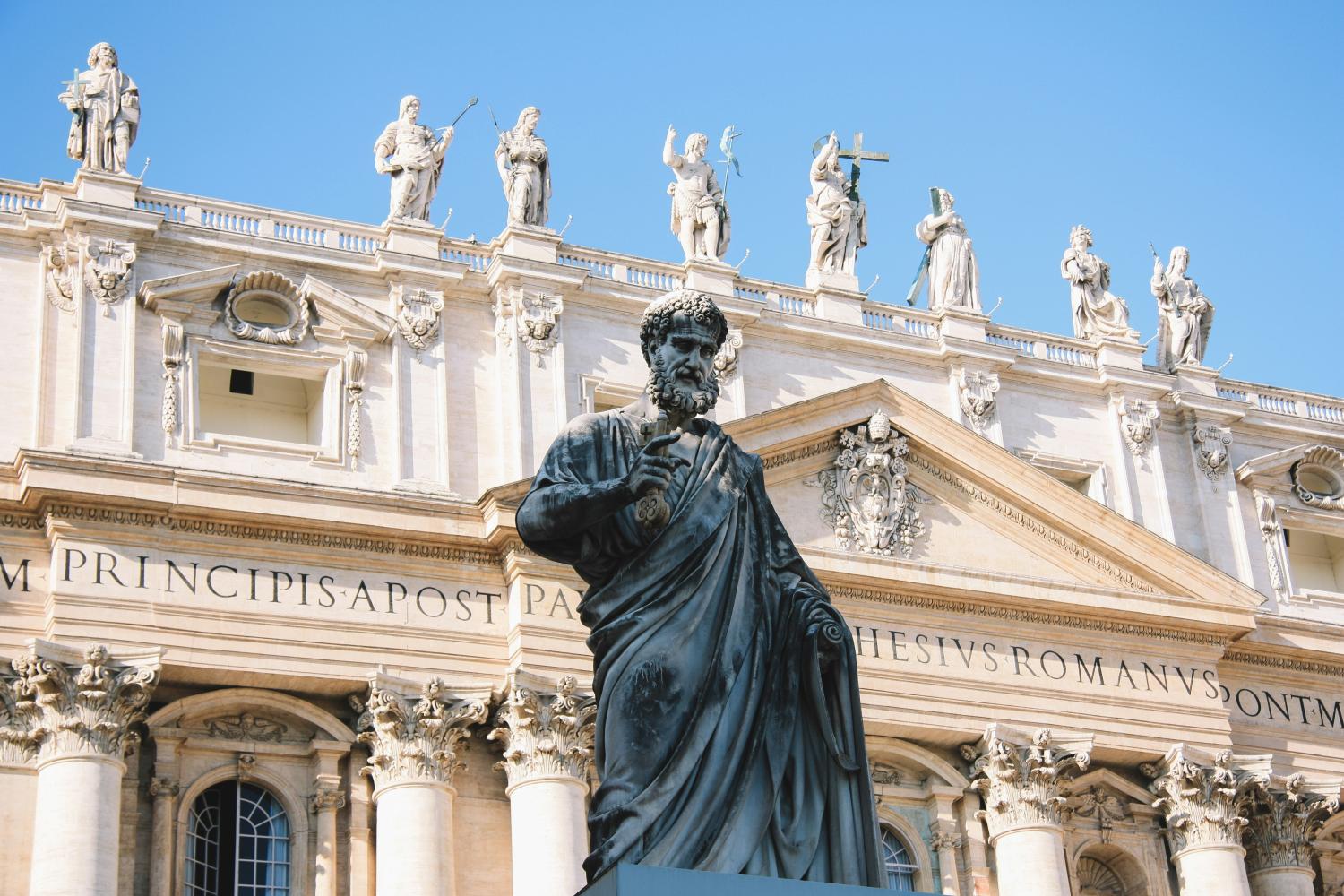
Last Friday, Pope Leo gave his first “State of the World” address. He was seated on the papal throne while giving it, and he didn’t mince words on several issues: he called for state-mandated protection of human life from natural conception until natural death, the honoring of the right to freedom of conscience and religion, and diplomacy based on dialogue rather than force, despite the fact that war appears to be “back in vogue” and a “zeal” for it “spreading.”
For the Pope to speak that candidly and authoritatively on matters so politically charged perhaps seems odd to us, who are so committed to the ideal of a separation between church and state. But the Pope wasn’t careening out of his lane, here. Indeed, his address responds to the way Jesus arranged for the papacy and the Church to function in the world (and particularly a fallen world).
It’s worth noting that the “separation of church and state” wasn’t always the default option in human societies. Until the time of Jesus, it was pretty much the universal norm that all authority – political, religious, and social – was united in a single office or set of offices. The King was also the high priest, or the High Priest was the ultimate ruler. It was Jesus, really, who changed all this in assigning to Caesar a subordinate and distinct, but real authority in his domain: “repay to Caesar what belongs to Caesar and to God what belongs to God” (Mt 22:21). Jesus also established a distinct authority in the Church. And in both actions, he made clear that while temporal authority was appropriate and even God-sanctioned, it was not absolute. There were arenas where temporal authority needed to be curtailed.
Specifically, Jesus insisted that the human conscience, the human search for truth, and the human desire for worship all touched humanity at the place where human beings were made in the image of God. Such matters might be watched over by temporal authorities in different ways, sure; but they were not to be subject to the whims of temporal rulers. They belonged to God; thus God was the only one to whom they should be submitted.
Hence the establishment of a spiritual kingdom on earth in the Church, with the Pope as its head and representative. The Pope was not meant to contest temporal authorities in ordering the affairs of human life, but Jesus did promise that he would be led by God himself, and would have the prerogative to insist that human minds and souls have proper freedom to pursue God. In this way, the Pope has been a great historical force in the world for limited authority.
If one reads through the address, it’s noteworthy that Pope Leo relies heavily on Augustine’s City of God, where the relationship between the kingdom of God and the kingdoms of this world is classically set forth. The Pope seems to want to remind governments of their limited arena of rule, and to call them to honor those aspects of the person that belong to God.
Hence the Pope is exercising genuine authority in insisting that world leaders honor certain areas of conscience: religious freedom, the sanctity of life, the dignity of migrants, the imperative for peace. These are areas in which the Church is called upon to be a primary agent of proper moral and spiritual growth. It’s significant that the Pope doesn’t ask the countries of the world to grant religious freedom as a favor, nor does he request the protection of life as a suggested policy goal. He’s not meddling in the domain of politics as just another political voice. He’s speaking with the Holy Spirit, and telling leaders that they need to fall in line on such matters, for their moral and spiritual good. To the degree that they don’t, they are opposing God himself.
Thus one sees here something of the role of the Pope and the Church in global affairs. The Pope doesn’t claim authority for specific economic or political initiatives, or the right to intervene forcefully in the affairs of various states. Instead he champions the cause of the human soul, and like Christ, he does so with the kind of authority that honors human governments and human persons, and their freedom, especially, to respond affirmatively or not.