Dogmatic Identity
August 6, 2026
4
min
read
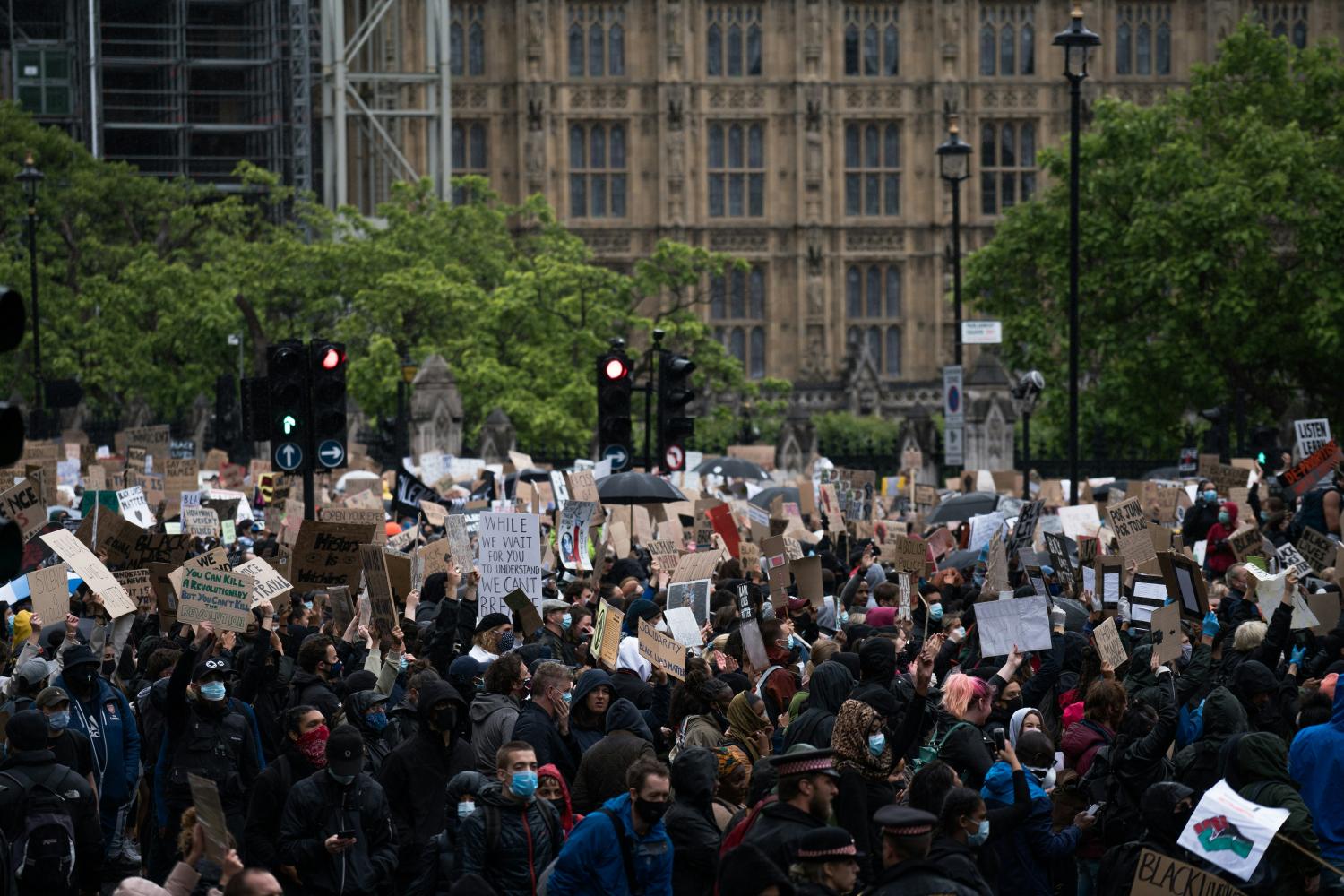
“The real campus speech crisis isn’t censorship,” says a recent Public Discourse headline. “It’s dogma.”
The piece takes as its departure point the free speech debate that has marked college campuses in recent years – a debate that “has focused almost entirely on deplatforming speakers for certain kinds of speech.” Censorship, as a result, has been hailed as one of the great evils of the contemporary university: adherents to hardline progressive agendas get to have their say; those with other agendas, don’t.
The result has been a proliferation of dogmatic allegiance to that kind of hardline progressive thinking. Tenets of progressive politics are latched onto totally and uncritically: “Death to Israel!” the author remembers one student yelling, as she marched past a debate the author was hosting. When asked to sit down and discuss that position, though, the student immediately declined.
She’s not the only one. College students are tending to be more and more open to rigid political positions, and less and less open to discussing them. The result is a loss of not just “deplatformed” voices on university campuses; there’s been a loss of student voices, too, almost wholesale.
That’s a dilemma in and of itself, of course: the author notes that without a setting for discussing hard, controversial ideas and differences of opinion, young people are entering their adult lives without knowing how to talk to people who don’t already agree with them. But it’s also a dilemma in that it’s reinforcing a certain kind of fragility that has come from students overidentifying with their political position. “Politics has become our identity,” the piece argues. In claiming a political position, students “aren’t just signaling what they believe; they’re signaling who they are.” And this is largely because political discourse has gone beyond being just political discourse: it deals not just with how to levy taxes or balance the jurisdictions of local and federal governments. Politics is attempting to answer fundamental human questions – questions about the nature of reality, of the human person, and of what we’re made for.
Those, of course, are ultimately religious questions – the sorts of questions that indeed secure what we stand for, and whom we know ourselves to be. They’re the sorts of questions that are the stuff of dogma. Political progressivism, though, can’t quite carry the weight of that, at least when placed under serious intellectual scrutiny – it doesn’t have the metaphysical ballast to offer clearly and confidently a coherent, stabilizing vision for human life. Rather, it tends to be super-moralistic, hyper-aggressive, and militantly intolerant, operating by force; to disagree with it is to risk placing oneself under attack as being a hate-filled person, and to possibly suffer psychic, if not physical, violence. But this is a recipe for fragility: it results in young people feeling more and more inclined to side with people and positions they understand less and less, even if they don’t realize it. Their politics is all they have, even if they can’t articulate why or how they have come to care so much about it.
Added to all of this is the unfortunate reality that many of the identity-forming aspects of human life have been decimated in contemporary culture, from family structures to robust neighborhood life to other social groupings. Increasingly isolated, it’s no wonder that young people are less keen to put their political positions on the line, having little to lean upon should those positions falter or be called into question.
For the truth is that all of us are looking for something to tell us who we are, and to whom and what we belong. There’s a lot we can find to do that for us – politics, university life, careers, this or that social justice cause. But the identities we find there will always be fragile. The truth is that the only secure foundation for a human personality is God. He alone can give us who we are, in a way that no one, and no argument or controversy, can take away.