Breathing with Two Lungs
December 4, 2025
3
min
read
Pope Leo made his first apostolic journey abroad a few days ago, making stops in both Turkey and Lebanon. Along the way, he delivered messages encouraging peace, dialogue, and ecumenism, speaking with both political and ecclesial leaders to urge the de-escalation of political and religious conflict.
Especially prominent was his visit with leaders of the region’s Orthodox churches. On both sides was a common desire for Christian unity, with Pope Leo encouraging pathways of fraternal encounter, dialogue, and love between the East and the West.
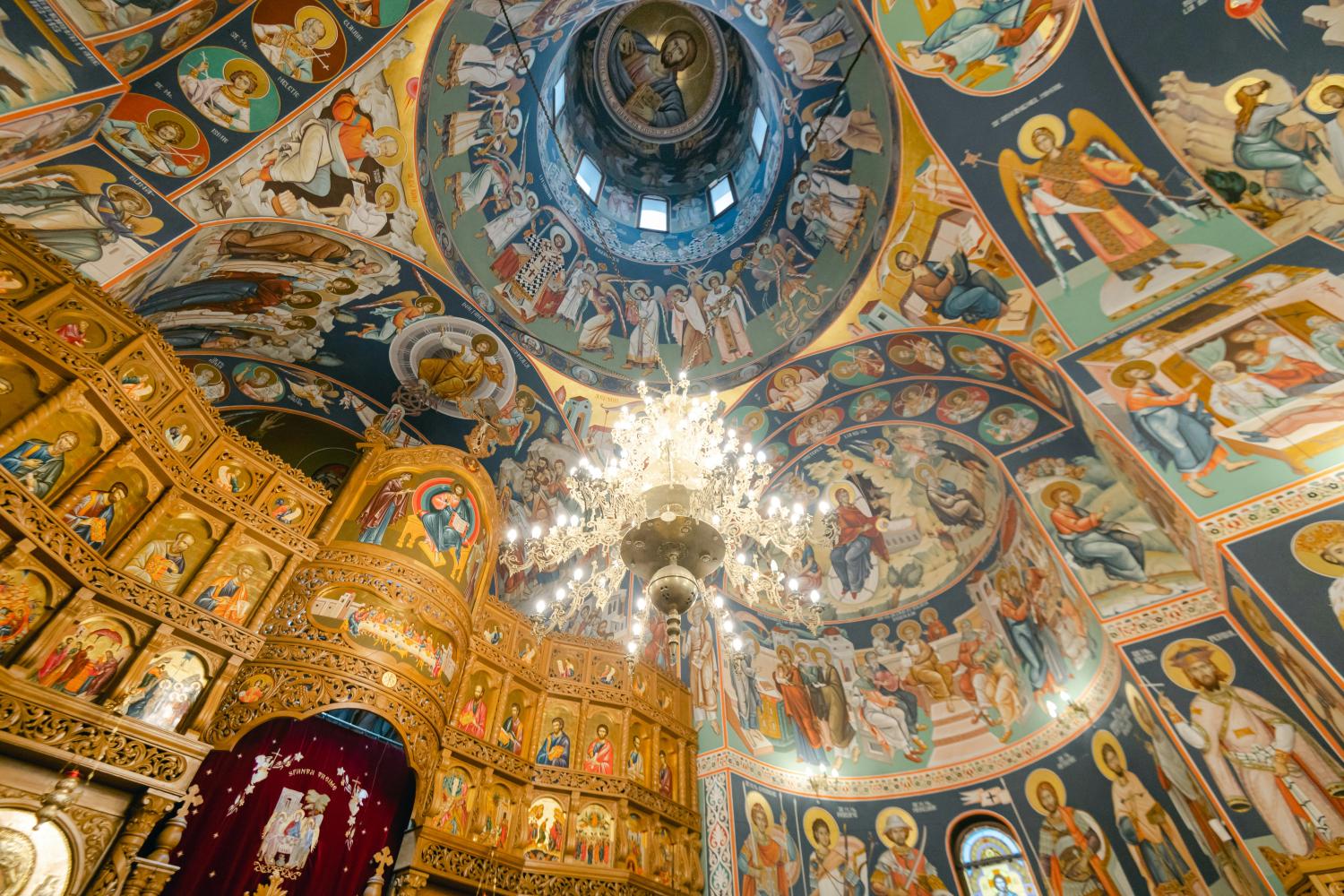
He’s not the first to do that. Pope Saint John Paul II once wrote that the Catholic Church ought to pursue unity with the East to once again “breathe with her two lungs.” So, it’s worth getting to know this other “lung.” What exactly is the Eastern Orthodox tradition? And how does Roman Catholicism relate to it?
The history of these two traditions is winding and a bit complicated. Lots of folks may be familiar with what’s known as the “Great Schism,” which happened in the eleventh century and which caused the formal separation between the East and the West. The separation was the result of certain theological disputes, as well as contention over the Pope’s claim to supreme and ultimate authority over the whole Church. The Eastern Church was reticent to accept that authority, and so went the schism.
Nonetheless, while some of Orthodox churches remain schismatic, they’re still recognized as having valid apostolic succession – meaning there’s been a valid line of ordained ministers that has proceeded all the way back from the Apostles. In other words, their tradition, too, began with the ancient Church. As a result, they’re also recognized as having valid sacraments: their baptisms and marriages are recognized as valid, but so are their celebrations of Holy Orders and of the Sacrament of the Eucharist.
It’s worth noting that because they’re not a tradition to be wary of or to keep at arm’s length; on the contrary, there’s much to be gained from them. Their history and practice of the faith is filled with liturgical, spiritual, and intellectual jewels. They’ve long had a strong emphasis on liturgy, for instance, and it shows: their music is beautiful, and their reverence and sense for the awesomeness of God is palpable. And they’re the possessors of a long and deep mystical tradition, as well, with monastics and spiritual persons seeking with all their hearts to come face to face with God as he is, in his immediacy and his splendor. In their theology, their sense for the sacred is robust. In their spirituality, their desire to be captivated by the sacred in mind and will is robust, too. Their tradition is filled with a love for God that’s clear, extraordinary, and heartening to encounter.
So, it’s worth staying close to this other “lung,” which does indeed make our praise of God more fulsome. Let’s therefore take Pope Leo’s encouragement, and example, to heart: Orthodox Christians are our brothers and sisters, after all, and those we ought to pray to share full communion with. So let’s pray for them indeed – for their flourishing, growth, wisdom, and holiness.