Europe and the Cosmic Order
November 5, 2026
5
min
read
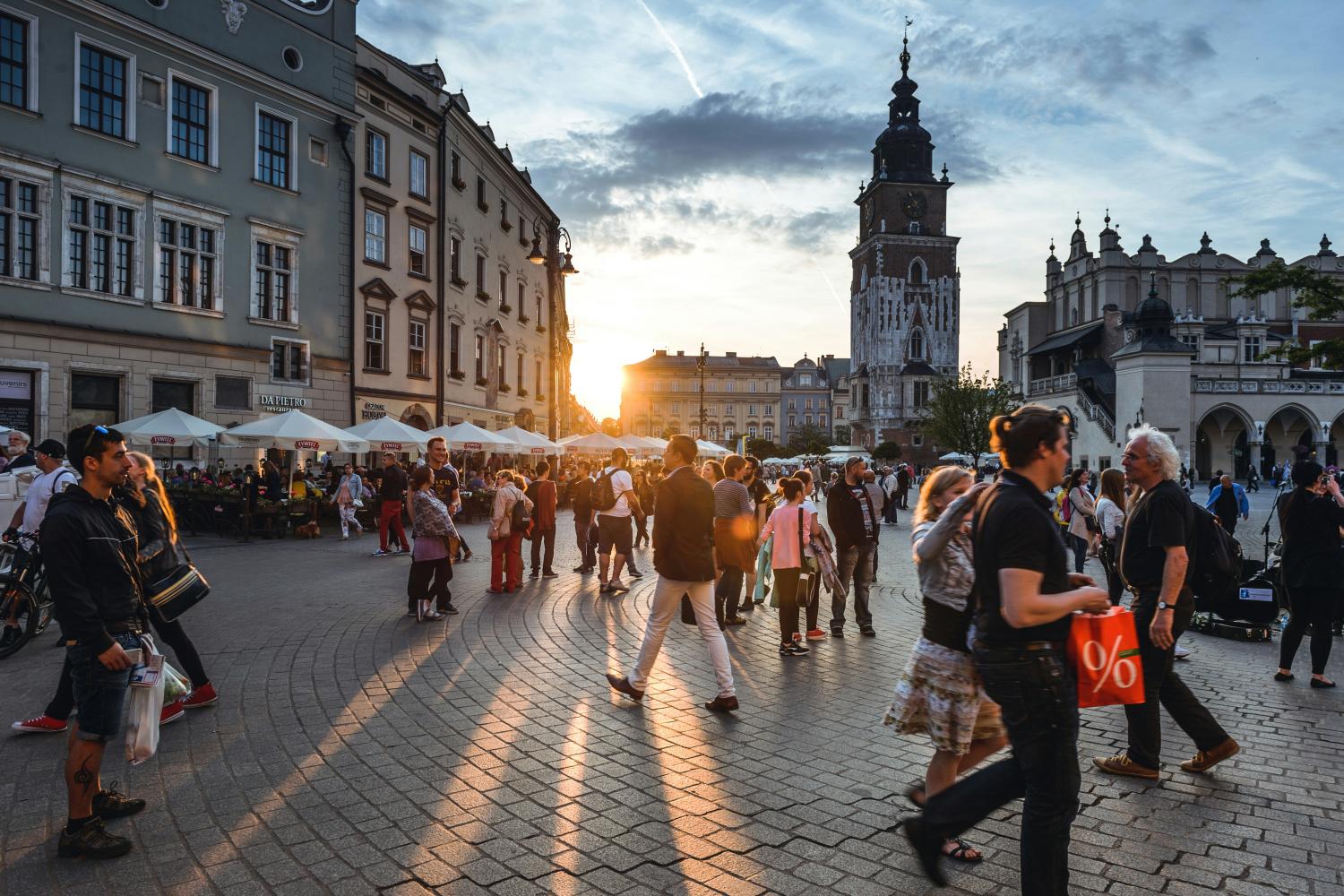
Europe is entering a moment of crisis.
Protests and riots have been sweeping across France for the last several weeks. What began as demonstrations in the streets have become more violent, with protestors looting French businesses and setting government buildings on fire. Thousands have since been arrested.
Partly student-led, the rallies began in protest of a crumbling French education system. But they’ve since grown to be more far-reaching: anger over poor economic growth, a rising cost of living, and a sizable government debt have fueled the ongoing unrest. And, that unrest has since taken hold in other European countries. Albania, Italy, and Germany have all seen similar demonstrations and mass property damage in the last couple of weeks. “It’s not just France,” one New York Times headline remarked, “Europe’s political center is crumbling.”
Of course, everyone is finding someone to blame for the chaos. Right-wing groups have suggested that the riots are the result of problematic immigration policies – the far left’s decision (in their view) to throw open European borders. As a result, they claim, there’s been a growing population of people in Europe who haven’t assimilated to European culture, priming the pump for this kind of violence.
It’s certainly not an issue as easily solvable as that. But, in that vein, one interesting factor that’s gone largely unremarked is the demographic one. If there are more immigrants in Europe today, it’s also true that there are far fewer Europeans. Europe’s population has shrunk over the last several decades, and not as a result of the usual historical causes – epidemics, war, famine. Rather, the birthrate has dropped precipitously. Europeans have simply stopped having children.
Why would that matter to all of this? Part of it is that it has resulted in a level of cultural inertia. A lower birthrate means that Europe’s population has also been aging rapidly. And that can be a subtle, but significant factor in creating an environment in which there’s simply not much energy for maintaining what’s been built. There’s a far smaller population that’s invested in the society, a smaller population which has the time and bandwidth and interest in protecting it.
But there’s something else happening, too. As a general rule, it has historically been the case that the most religious cultures have had the most substantial population growth. That’s in part because such cultures have tended to have a more stable hope, a firmer and more meaningful reason for bringing new souls into the world. As Europe has secularized, then, and as it’s become less necessary to have lots of children to maintain families’ livelihoods, what’s gotten lost has been a clear answer to questions about the meaning and purpose of something like a family. Children are lots of work. They require a lot of energy and time and money. So why bother with them, if one can enjoy the relative ease of a life without them? And, why bother with them if the world as one knows it doesn’t have any particular hope, any lasting and profound value?
Such questions are a mirror for how questions of meaning are being asked more broadly, in a given culture. And in this respect, what’s interesting about the demographic question in Europe is that it’s coincided with the non- and sometimes anti-Christian attempts to establish a different kind of Europe from the Christian one – a “reimagined” or “new” Europe, free from all of its religious baggage. But that Europe hasn’t quite resolved these questions of meaning – what, truly, a “reimagined” or “new” Europe is supposed to mean for whom people understand themselves to be and what they understand themselves to be made for. As Europe has been marked by its pursuit of a particular kind of secular utopia, then, that utopia has turned out to be one Europeans are now looting and burning and not repopulating. They’ve brought into being a society that they don’t very much like living in. And it’s hard to imagine that these questions of ultimacy don’t have something to do with it.
Nevertheless, such a perspective seems largely unregarded by political leaders. Questions of demography or culture aren’t preeminent in their conversations. Instead, world leaders seem to be staring at the situation – the economics and the politics and the policy of it – without putting it into the context of these larger concerns about why: why their people don’t just not want to live in a given political order, but also don’t want to perpetuate life at all. And one might say that they’re not having those conversations because they can’t. Without an understanding of the invisible world, discussions of value and meaning and truth are too slippery to perceive. And yet, without those considerations – considerations of value and meaning and truth – one also can’t see rightly how to think about maintaining cultures, security, and justice. The result is that those who only take into account the natural world end up inept not just at handling the larger philosophical questions. They struggle to handle the more immediate ones, too – the ones that pertain to their natural concerns themselves, concerns about how their citizens are behaving, and why.
An orientation to a larger, cosmic order, therefore, isn’t just a nice thing to have – something interesting to debate when one has the time. It’s pertinent to the most immediate and urgent questions of the day. The Europe question is a vast and complex one, again not clearly solvable. But it’s even less clearly solvable when that broader orientation and those larger questions are left off of the table – those questions that are actually most relevant to determining whether citizens want to live in the world that they do, or not.